


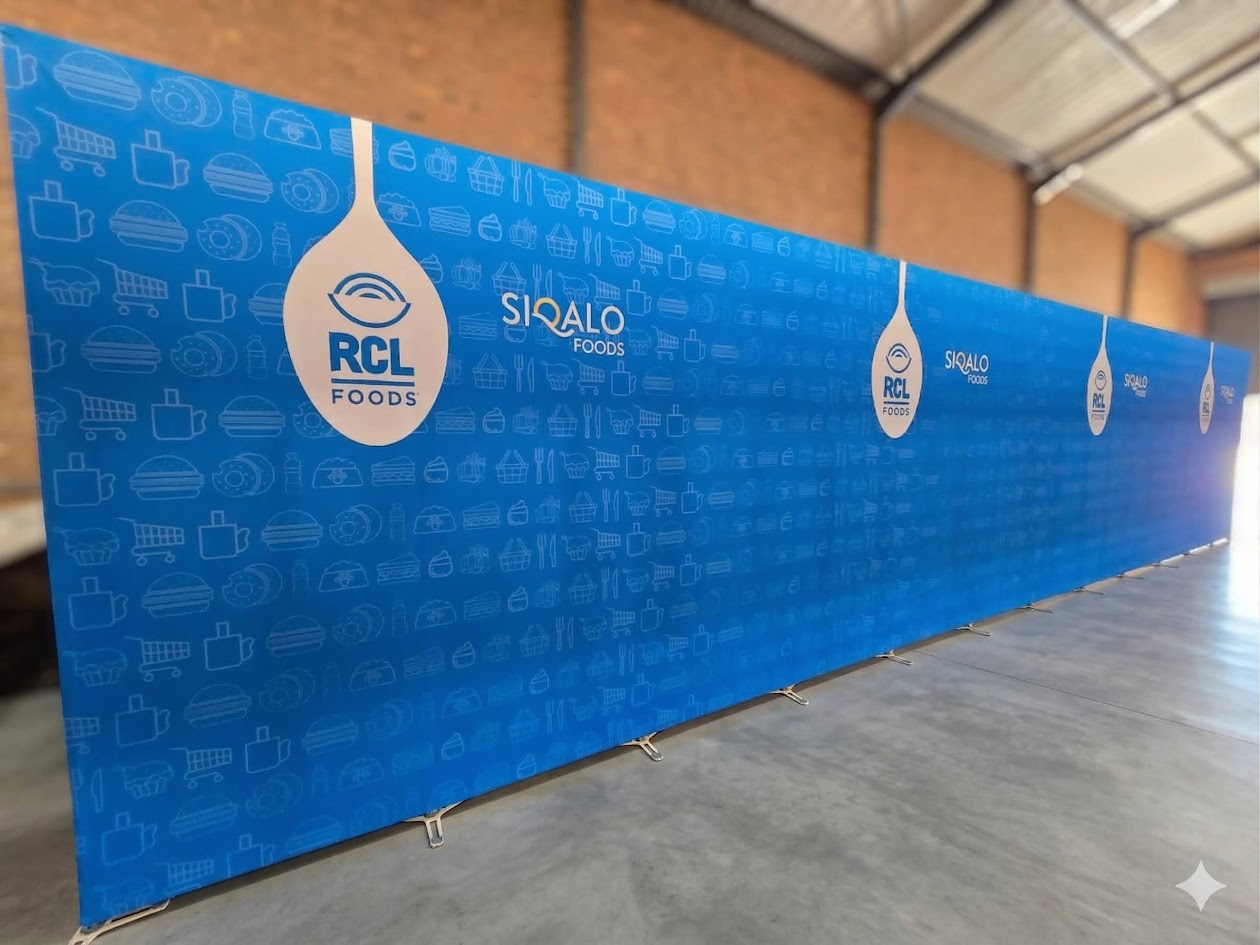
What Is a Textile Tensioning Display Solution and Why Is It So Effective
Textile tensioning display solutions combine lightweight aluminum frames with tightly stretched, custom-printed fabric graphics. These displays are wrinkle-free, easy to set up, and visually striking, making them ideal for trade shows, retail spaces, and media backdrops. The dye-sublimated fabric ensures sharp, durable visuals and reduces glare under various lighting conditions. Assembly is tool-free, quick, and designed for portability, with most systems fitting into compact carry bags.
Key Features:
- Smooth, wrinkle-free surfaces for professional visuals.
- Quick assembly with no tools required.
- Portable and lightweight – a 10-foot backwall typically weighs under 30 lbs.
- Reusable frames with interchangeable fabric graphics.
- Durable materials, including washable, fire-retardant fabric and recyclable aluminum.
Whether you need a simple banner stand or a modular booth, these displays offer flexibility for different event setups while ensuring your brand stands out.
Core Components and How Textile Tensioning Displays Work
Key Structural Elements
Textile tensioning displays are built around three main components: a lightweight aluminum frame, a printed fabric graphic, and a tensioning mechanism that ensures a smooth, wrinkle-free surface.
The frames are crafted from cold-drawn aluminum tubing, which is 99% recyclable. This material is both strong and lightweight – an example? A wall almost 8 feet tall and 30 feet wide can weigh less than 66 pounds. To enhance stability, connector joints and feet are often made from steel or ABS plastic.
The fabric graphic typically uses warp-knit polyester, weighing between 200–300 g/m². Its natural stretch makes it ideal for creating a tight, undistorted display. There are three common methods for tensioning the fabric:
| Tensioning Method | How It Works | Best For |
|---|---|---|
| Mechanical Tensioner (e.g., TRIGA box) | A button or press-down device tightens the fabric by securing the rail | Large exhibition stands, curved walls |
| Silicone Edge Graphic (SEG) | A silicone strip sewn to the fabric edge fits into a recessed channel on the frame | High-end retail, backlit displays |
| Pillowcase/Zipper | The fabric slides over the frame like a pillowcase, with a zipper at the base to create tension | Straight backwalls, quick setups |
The frame pieces connect using snap-fit buttons, twist-and-lock joints, or slot-and-snap fittings, so no tools are needed. The choice of tensioning method is critical, as it directly impacts the final appearance of the display.
Once these components are ready, the assembly process is quick and hassle-free.
Step-by-Step Assembly Process
Here’s how to set up your display efficiently:
- Start by unpacking and organizing all parts, including uprights, crossbars, feet, and graphic rails. Many systems use color-coding or numbering for easy identification.
- Attach the feet to the uprights and secure the crossbars to complete the frame.
- Add the fabric graphic using the preferred tensioning method: slide the pillowcase over the frame, press the SEG edge into the recessed channel, or clip the graphic rails into position.
- Apply tension by activating the mechanical tensioner or zipping the pillowcase-style graphic to pull the fabric flat.
“The secret is in the ‘self-tensioning’ TRIGA box which allows you to simply press a button and apply seamless tension to the fabric surface of your display.” – TRIGA® Displays
A standard 10-foot-by-10-foot U-shaped booth can be set up by one person in under 30 minutes. This design ensures not only a visually striking display but also a quick and easy setup – perfect for high-pressure events. When it’s time to pack up, fabric graphics fold flat and fit into small carry bags, making transport and storage a breeze.
sbb-itb-b68070b
Common Types of Textile Tensioning Display Solutions
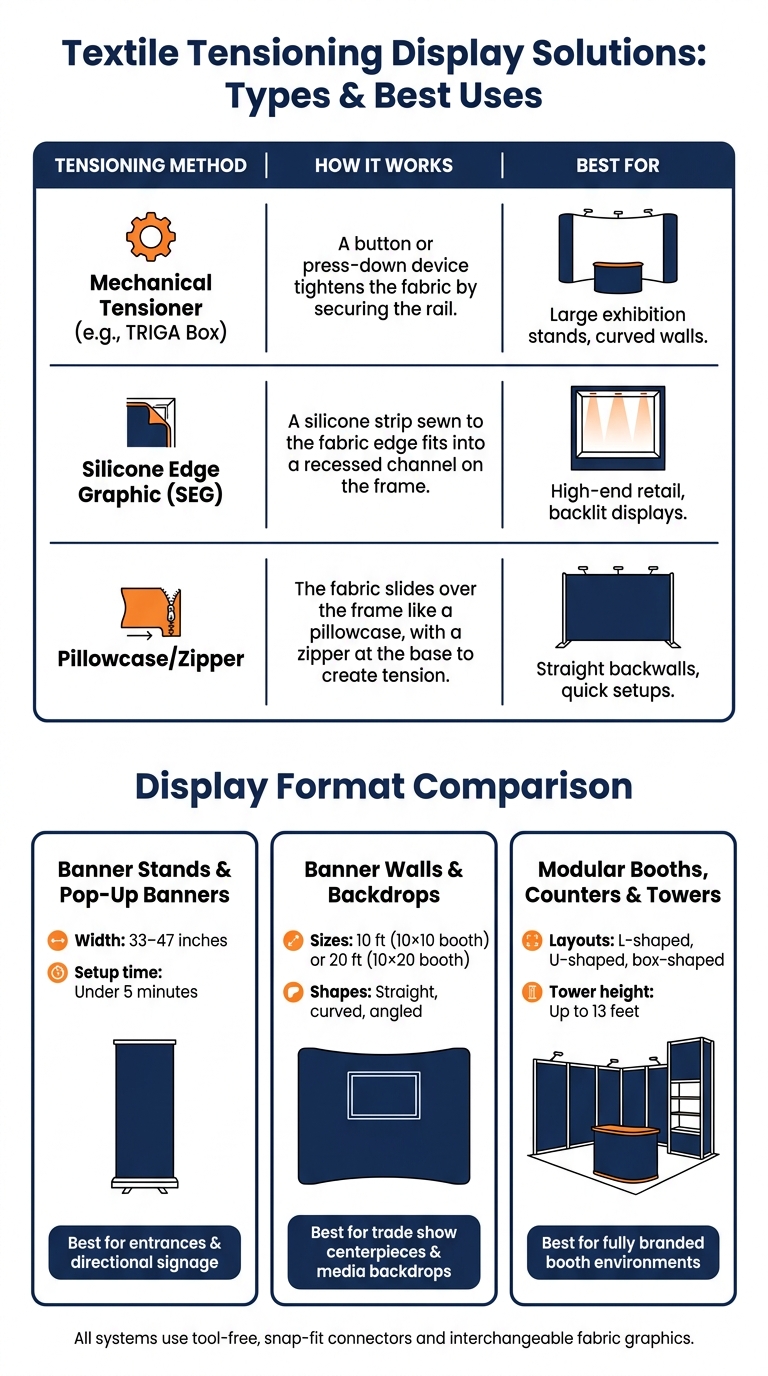
Textile Tensioning Display Types: Features & Best Uses at a Glance
Building on a simple design and quick assembly, these options provide tailored solutions for various event settings.
Stretch Fabric Banner Stands and Pop-Up Banners
When it comes to portability and quick setup, banner stands and pop-up banners are hard to beat. Banner stands, usually between 33–47 inches wide, can be assembled in under 5 minutes. They’re perfect for entrances, directional signs, or highlighting key messages in product zones, all while taking up minimal floor space. Pop-up banners, on the other hand, feature an expandable aluminum lattice frame. Once expanded, the fabric either clips onto or wraps around the frame, creating a smooth backwall. This makes them a fast and space-saving choice for any event setup.
Textile Banner Walls and Backdrops
Banner walls often act as the centerpiece of trade show booths. For a standard 10×10 booth, a 10-foot backwall fits perfectly, while a 20-foot wall is ideal for larger 10×20 spaces or beyond. These walls come in various shapes – straight, curved, or angled – allowing them to adapt to different booth layouts and create striking visual effects.
But their use goes beyond trade shows. Textile banner walls are popular as media backdrops for press events, step-and-repeat photo walls at corporate gatherings, and even as office dividers. A helpful tip: position your logo and key message in the top third of the design. This ensures they remain visible above furniture, crowds, or displays, maximizing their impact.
For venues looking to create fully branded environments, modular configurations take customization to the next level.
Modular Booths, Counters, and Towers
Modular systems bring together walls, counters, and towers to form a cohesive booth environment. These frames can be arranged into L-shaped, U-shaped, or box-shaped layouts, transforming generic setups into fully branded spaces.
Counters built with the same modular hardware can double as reception desks or product displays, maintaining a unified look throughout the booth. To grab attention in large venues, branded towers can rise up to 13 feet, serving as indoor landmarks. The beauty of modular systems lies in their flexibility – since all components use the same connectors, you can reconfigure the layout for future events without needing new hardware. This approach not only strengthens brand presence but also meets the demand for quick and adaptable event setups.
“Using our award winning, modular display systems, we’re able to create eye-catching display and exhibition stands that are not only easy to build, but adaptable to new events.” – Triga Display Systems
Why Textile Tensioning Displays Work So Well
Modular systems combine eye-catching visuals with practical functionality. From the sharpness of the images to their lightweight portability, every feature is designed for efficiency and impact.
Edge-to-Edge Visuals and Brand Presentation
One standout feature of fabric displays compared to traditional vinyl banners is how they interact with light. The matte surface of warp-knit polyester absorbs light rather than reflecting it, eliminating glare and ensuring the display looks clear from every angle.
The dye-sublimation printing process embeds ink directly into the polyester at 400°F (205°C). This technique ensures that colors remain vivid and images stay intact, even after repeated use. For large-format displays, graphics are printed at 720 DPI, delivering photo-quality sharpness – even for displays spanning 10 feet or more.
Easy Setup and Portability
Textile tensioning displays aren’t just visually appealing – they’re also designed for hassle-free assembly. A 10-foot backwall can be set up in under 15 minutes by a single person, thanks to user-friendly snap-fit or push-button connectors.
These systems are also incredibly lightweight, often up to 75% lighter than traditional rigid panel setups. A typical 10-foot backwall packs into a single bag weighing less than 30 pounds. Smaller 8-foot systems are so compact they can even be checked as airline luggage, saving on shipping costs.
Flexibility and Reusability
Another major advantage is their versatility. The hardware and graphics are designed independently, allowing you to refresh your branding by simply swapping out the fabric graphic. The durable aluminum frame can be reused for multiple events and seasons, making it easy to tailor your display for different audiences or occasions.
Durability and Venue Compliance
Dye-sublimated fabric is built to last. The polyester material resists scratches, moisture, and can even be machine washed on a gentle cycle. To maintain its shape and quality, it’s best to air-dry the fabric to avoid shrinkage from heat.
For events in the U.S., safety compliance is often a priority. Textile displays typically meet NFPA 701 standards, meaning the fabric is fire-retardant and will self-extinguish if exposed to flames. This certification ensures these displays meet the strict safety requirements of most convention centers, making them a dependable choice for any venue or event.
How To Choose and Use Textile Tensioning Displays
Defining Event Goals and Space Requirements
Start by identifying your event goals and the space you have to work with. For example, a standard 10×10 ft booth usually calls for a 10 ft backwall. If you’re focused on lead generation, consider pairing the backwall with a branded counter. For product demos, a compact totem-and-screen setup works well. If you’ve got a corner booth, an L-shaped configuration can help draw in more visitors.
“Your backdrop sets the tone for every conversation that happens at your booth.” – Nar Galvez, Design One Printing
Don’t forget to plan for height. Portable systems like TRIGA® Go can reach up to about 8 ft (2.5m), which is ideal for most venues. For larger, high-traffic events where visibility is key, a heavy-duty system like TRIGA® Max can go as high as 16 ft (5m), offering a billboard-like presence.
Once you’ve nailed down the purpose and layout of your booth, it’s time to shift your attention to creating eye-catching graphics and arranging your displays effectively.
Planning Graphics and Display Configurations
With your display setup decided, the next step is graphic design. For dye-sublimation printing, aim for source files at 150–300 DPI at full size. If your display spans 10 feet or more, some printers suggest going up to 720 DPI for the sharpest results.
To maximize visibility, position your logo and main headline in the upper third of the graphic. This keeps them above furniture, crowds, and other signage. Add interactive elements like QR codes at eye level – around 5 ft (1.5m) – so visitors can easily scan them. Keep your messaging simple: one clear headline with two or three supporting points is enough. Attendees form an impression in under five seconds, so clarity is your best friend.
If you’re using backlit frames, opt for denser fabric or double up the print layer. This prevents the colors from looking faded or washed out under the lighting.
Cleaning, Storage, and Graphic Updates
After each event, clean your frames and counters before packing them up. Machine wash the graphics gently and air-dry them to avoid heat shrinkage. These small steps can extend the life of your display and keep it looking sharp for future shows.
When storing your graphics, fold them with the print side facing inward and label each panel by module and side (e.g., “Wall A Front”). Store them in a cool, dry place away from direct sunlight. Including a photo of the fully assembled booth in the storage bag can make future setups much faster. During teardown, take note of any parts or graphics that need repair or replacement. Addressing these issues early will save you from last-minute stress at your next event.
Conclusion
Textile tensioning display solutions provide a sleek, wrinkle-free look with minimal effort during setup. The edge-to-edge, wrinkle-free graphics create an immediate visual impact, while the straightforward assembly ensures your team can focus on engaging with attendees instead of wrestling with complicated displays.
The benefits go beyond aesthetics. For instance, a 30-foot-long wall standing nearly 8 feet tall weighs less than 66 pounds – light enough to transport in a standard vehicle. Plus, when it’s time to update your visuals for a new campaign or product launch, replacing the fabric graphic typically costs just 20% of the original stand investment. That means the hardware continues to pay off over multiple events.
These displays are designed with longevity in mind. Featuring durable aluminum frames, materials that are 100% recyclable, and components that can be reconfigured into various booth layouts – like a 10×10 ft backwall, a U-shaped booth, or even a tower – you won’t need to start from scratch each event season. This blend of reusability and durability keeps costs down while maintaining performance.
For exhibitors in the U.S., where tight schedules and demanding event calendars are the norm, this combination of speed, adaptability, and visual appeal is a winning formula. Whether you’re showcasing your brand at a large trade show or a smaller local event, textile tensioning displays offer a polished, professional presence without the hassle.
FAQs
Which tensioning method should I choose (SEG, zipper, or mechanical)?
TRIGA® display frames feature a proprietary tensioning system designed to stand apart from typical methods like silicone edge graphics, zippers, or manual stretching. With patented, tool-free mechanisms – like button-activated tensioners or graphic rails – TRIGA® ensures your graphics stay smooth and wrinkle-free. No tools, no hassle, no complicated adjustments – just a flawless, professional finish every time.
What size display do I need for a 10×10 or 10×20 booth?
For a 10×10 booth, a 10-foot-wide display works perfectly as a backwall. Using modular textile tensioning systems, you can easily upgrade to a 10×20 booth by adding extra components or frames. Both TRIGA Go and TRIGA Max offer flexible setups, helping you create a polished and branded display that adjusts effortlessly to different booth sizes.
How do I travel and ship a fabric backwall without damage?
To ensure safe travel and shipping of a fabric backwall, consider using the lightweight and modular TRIGA Go system. This system disassembles into compact parts that fit neatly into carry or wheelie bags, offering excellent protection for the hardware.
For the textile graphic, fold it with the print side facing inward and make sure it’s stored dry to maintain its quality. The stretch fabric is designed to resist damage and can be reused, making it durable enough to withstand multiple shipping cycles.