


Using AI at Trade Shows Without Letting Technology Take Over Your Booth
Artificial intelligence is becoming part of everyday marketing, and trade shows are no exception.
AI can help exhibitors prepare for an event, answer visitor questions, organise leads, translate information and follow up after the show. Used well, it can save time and make the whole exhibition process more efficient.
But there is a balance to get right.
People attend trade shows because they want something they cannot get from a website or an email. They want to see products, ask questions, meet people and have real conversations.
AI should make those experiences easier — not get in the way of them.
So, how can you use AI at a trade show without turning your booth into a wall of screens, QR codes and chatbots?
Let AI Help Before the Event
Some of the most useful ways to use AI happen before the trade show even starts.
Preparing for an exhibition involves a lot of work. You need to understand the audience, choose which products to promote, prepare your marketing material and make sure your team knows what to talk about.
AI can help speed up some of these tasks.
For example, you could use it to:
- research common questions customers ask
- summarise industry trends
- help create or shorten marketing copy
- prepare different versions of product information
- suggest talking points for your stand team
- help staff practise answering common questions
The important thing is to check the information before using it. AI is a useful assistant, but your own product knowledge and experience should still guide the final decisions.
Use AI to Make Conversations Easier
During the show, AI should support your team rather than replace them.
Imagine a visitor asks a detailed question about one of your products. Instead of searching through several brochures or documents, your team could use an AI-supported tool to quickly find the right specification, case study or product information.
At international events, translation tools can also help staff communicate with visitors who speak different languages.
AI can even help recommend relevant products or information based on what a visitor is interested in.
The best use of technology is often the kind visitors hardly notice. It helps your staff give better answers while the actual conversation still happens person to person.
Don’t Create a Digital Obstacle Course
Technology can become a problem when visitors are expected to do too much before they can engage with your brand.
Imagine walking onto a booth and being asked to:
scan a QR code, download an app, enter your email address, use a touchscreen and then talk to a chatbot.
By the time you reach a real person, you may have lost interest.
Before adding any digital tool to your booth, ask a simple question:
Does this make the visitor’s experience easier?
If the answer is yes, it may be useful.
If it simply adds another step, it might be better to leave it out.
A QR code that opens a useful product guide can work well. A QR code that makes someone complete a long form before they can access basic information probably does not.
Remember Why Visitors Came
Most visitors can already research your company online.
They can read your website, watch product videos, download brochures and even ask AI questions from their desk.
A trade show offers something different.
It gives them the chance to see a product in real life, watch a demonstration, ask unexpected questions and speak to someone who knows the product.
That human interaction is one of the biggest strengths of an exhibition.
Your team should therefore remain easy to approach. AI should free them from repetitive tasks so they have more time to speak to visitors, not less.
Don’t Let Screens Take Over Your Booth
Digital screens can be extremely useful.
They can show product demonstrations, animations, technical information or products that are too large to bring to the event.
But more screens do not automatically create a better booth.
If every wall is moving, flashing or displaying different information, visitors may struggle to understand what they should actually look at.
Physical exhibition graphics still have an important role.
Clear branding, a strong headline and simple messaging can tell someone what your company does before they even enter the booth.
Screens and AI tools can then provide extra detail when it is needed.
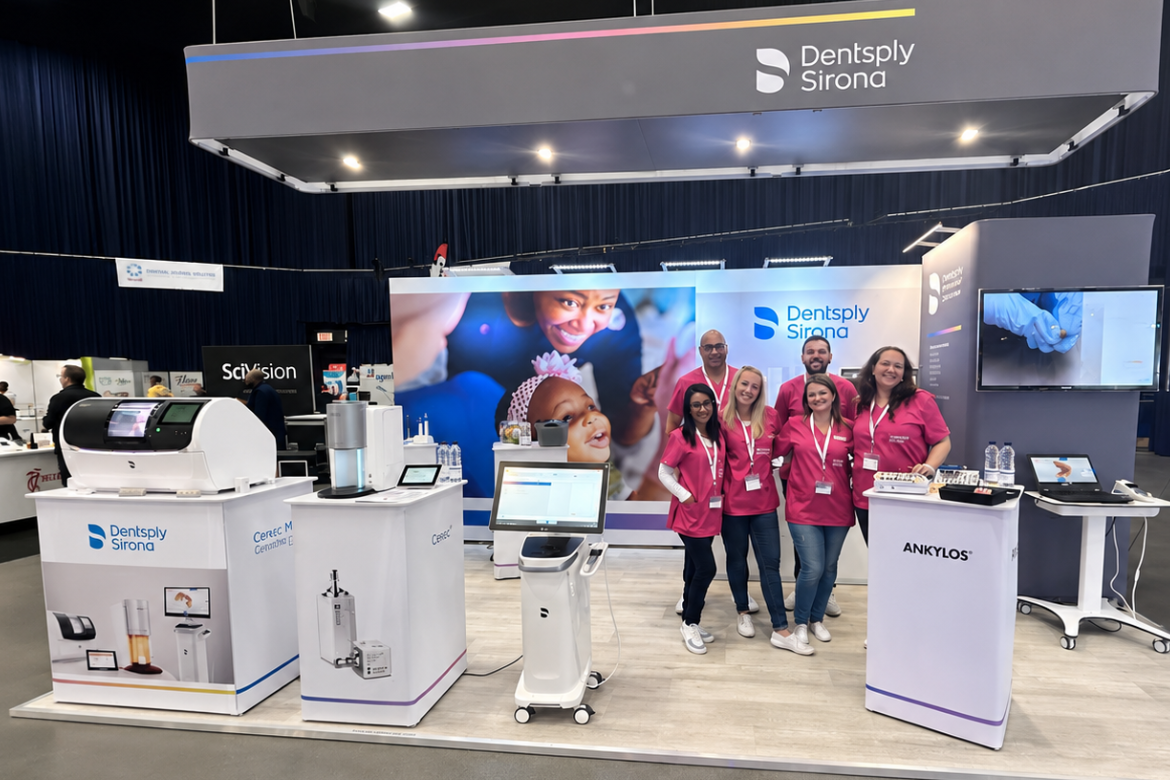
TRIGA® Display Systems allow exhibitors to combine tensioned textile graphics, modular structures, screens, counters and other display elements within one booth.
The result can be a good balance between physical branding and digital technology rather than forcing everything onto a screen.
Use AI to Improve Lead Capture
AI can also help make the information collected at trade shows more useful.
Instead of leaving with a list of names and email addresses, your team could record what each visitor was interested in, which products they discussed and what questions they asked.
AI can then help organise those notes.
For example, leads could be grouped according to product interest or how soon they are likely to need a follow-up.
But there is no need to collect every possible piece of information.
Only gather data that is actually useful, and make sure visitors understand when their details are being collected and how they will be used.
Make Better Use of AI After the Show
The days after an exhibition can be just as important as the event itself.
Your team may return with business cards, notes, enquiries and dozens of people who need a follow-up.
This is where AI can save a lot of time.
It can help:
- organise notes from conversations
- group leads by interest
- summarise common visitor questions
- draft follow-up emails
- create different follow-ups for different types of leads
- identify topics that came up repeatedly during the event
Those repeated questions can also be useful for your next exhibition.
If visitors constantly ask the same thing, perhaps that information should appear more clearly on your next set of exhibition graphics or sales material.
In this way, AI can help you learn from one show and improve the next.
Keep People at the Centre
AI will almost certainly become a bigger part of trade shows.
It can make research quicker, improve translations, organise leads and help exhibitors provide more relevant information.
But the most successful booth does not have to be the one using the most technology.
Use AI where it saves time or removes unnecessary work. Use screens when they genuinely help explain something. Use digital tools when they make it easier for visitors to get the information they need.
Then leave plenty of room for what trade shows do best: bringing people together.
AI should support the conversation, not replace it.